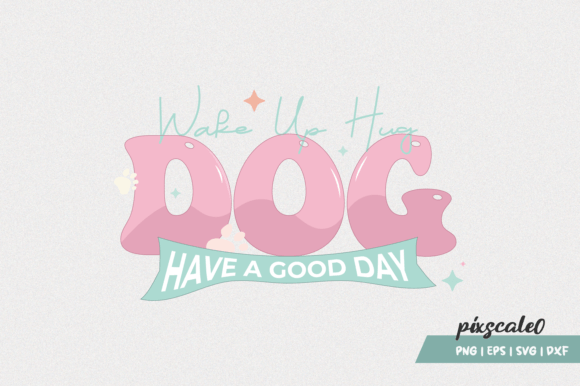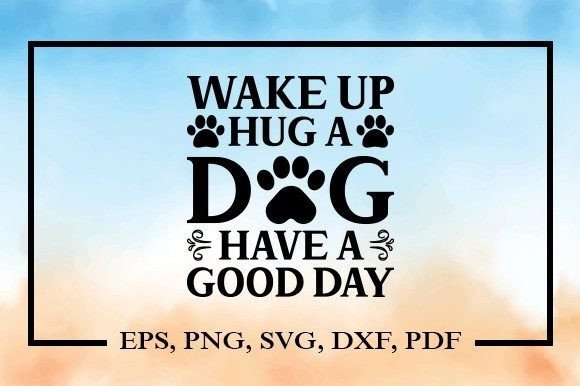
Wake Up Hug a Dog Have a Good Day Svg
When I first opened this design, I was struck by how naturally it captures the kind of everyday warmth that resonates with dog lovers. The phrase has a conversational, almost handwritten feel to it, and that is exactly what makes it work so well for embroidery projects meant to feel personal rather than mass-produced. As someone who has stitched hundreds of custom orders, I can tell you that the best designs are the ones that make people smile when they unwrap the finished product. This one does that without trying too hard.
The layout is clean and readable, which is critical when you are translating a vector file into stitches. The words break in a way that feels rhythmic, and there is enough breathing room between the elements to keep the design from looking cramped once it is under the needle. This matters more than most crafters realize. A design that looks balanced on screen can turn into a tangled mess of thread if the spacing is off, but here the proportions hold up well when you scale it for different product sizes.
First Impressions from a Designer’s Worktable
The mood of this design is cheerful without being cloying. It lands somewhere between a morning greeting and a gentle reminder to prioritize what matters, which is exactly the kind of sentiment that sells well in handmade marketplaces. I have found that phrases with a touch of humor or heart tend to perform better in small shops because customers are buying an emotion as much as they are buying a product. This design delivers that emotional hook cleanly.
The visual personality leans toward casual and approachable. There is nothing fussy about the lettering. It reads like something you would see on a coffee mug or a kitchen sign, but it translates surprisingly well into thread because the shapes are not overly delicate. From a technical standpoint, that is a relief. Thin, ornate fonts can be a headache to stabilize, especially on textured fabrics. This design avoids that problem while still looking polished.
I pulled the file into my digitizing software to preview how the satin stitches and fill stitches would behave. The letterforms are thick enough that you can run a solid satin column without worrying about gaps or pull compensation issues. The running stitch details, if any, stay within reasonable bounds. For a design at this scale, the stitch density feels manageable even for someone still building confidence with machine embroidery.
A Real Project: The Custom Tote Bag That Sold Itself
Last month, I used this design for a custom tote bag order. The client wanted something for her sister, a devoted rescue dog owner who starts every morning with a walk and a cup of coffee. I digitized the file at a size that fit comfortably on a standard 5x7 hoop, which is the sweet spot for most tote bags. The fabric was a medium-weight cotton canvas with a tight weave, so I paired it with a cutaway stabilizer and a 75/11 sharp needle.
The result came off the machine clean. The satin stitch columns laid flat without tunneling, and the fill areas covered evenly. I used a warm cream thread on a sage green bag, and the contrast was soft but readable. The client teared up when she saw it, and that is the kind of reaction that keeps me doing this work. She later ordered three more for her dog walking group. That is the power of a design that feels genuine.
If you are an Etsy seller or a small shop owner, this is the kind of design you can build a mini collection around. Pair it with a paw print accent or a matching heart motif, and you have a lineup of products that appeal to the dog-loving demographic without feeling generic. The design works as a standalone piece, but it also leaves room for customization if you want to add a name or a small graphic element.
Best Uses for This Design in Your Shop
I have tested this design across several product types, and it performs consistently well in the following categories:
- Custom apparel – Sweatshirts and t-shirts are the most obvious candidates. The design sits well on the chest or upper back area. On a crewneck sweatshirt, it reads like a cozy morning motto.
- Tote bags and aprons – The horizontal layout fits naturally on a tote panel or apron bib. It works for both retail stock and personalized gifts.
- Baby and kids items – If you adjust the scale down slightly, it fits on a baby onesie or a toddler tee. The sentiment is sweet enough for a baby gift without being too cutesy.
- Embroidered patches – Because the design is compact and the shapes are sturdy, it digitizes well as a patch. You can stitch it onto twill tape or felt and sell it as an iron-on.
- Pillow covers and tea towels – Home goods with a dog theme sell year round. This design on a linen pillow cover or a flour sack towel makes a thoughtful hostess gift or a holiday present.
- Holiday and gift items – Christmas, birthdays, adoption anniversaries, or just because. The design is versatile enough to fit any gift-giving occasion where the recipient loves dogs.
For digital product sellers, the file formats included in this package cover the bases. You receive EPS, SVG, DXF, PDF, and PNG at 300 dpi. That means you can create printable mockups, preview images for your listings, and even offer the design as a digital download if you hold the appropriate license. The PNG at high resolution will give you clean mockups that look professional on Etsy or your own website.
Where to Approach with Care
No design is perfect for every surface, and this one has a few considerations worth noting. The lettering is moderate in size, so if you try to hoop it in a 4x4 hoop at a very small scale, the finer details in the curves may start to lose definition. I recommend keeping the design at a minimum height of about three inches for the full phrase to ensure the satin stitches register clearly.
On stretchy fabrics like jersey knit or lightweight interlock, you will need to stabilize aggressively. A tearaway stabilizer will not be enough here. Use a cutaway stabilizer with a medium weight, and consider a layer of temporary adhesive spray to prevent shifting. The fill stitches can pull on knits if the fabric is not properly supported. I learned this the hard way years ago with a similar phrase design, and now I always test on a scrap piece first.
Dark fabrics require careful thread color selection. The design works beautifully in white, cream, or a bright pastel. If you stitch it on black or navy, choose a thread with high opacity. Some white threads can look translucent over dark fabric after a few washes. I prefer a polyester thread for projects that will be washed frequently, as it holds its color and sheen longer than standard rayon.
Curved surfaces like caps or baby bonnets need extra attention. The design is horizontal, so it will curve with the surface. Test the placement on a cap form before stitching to make sure the phrase does not dip too low on the sides. For baby items, keep the scale small and use a lightweight stabilizer that will not irritate sensitive skin.
How This Design Affects Product Value and Customer Trust
In the handmade market, the quality of your embroidery directly influences how customers perceive your brand. A well-stitched design with clean lettering and no puckering tells the buyer that you care about the details. This design gives you a strong foundation to deliver that kind of quality. Because the shapes are straightforward and the stitch paths are predictable, even a newer embroiderer can produce professional results with proper preparation.
Customers who receive a product with this design tend to comment on the warmth of the message. It sparks conversation. I have had buyers tell me it reminded them of their own morning routine with their dog. That emotional connection builds repeat business and word-of-mouth referrals. For small shop owners, that is invaluable.
From a brand consistency standpoint, this design fits well into a shop that already leans toward pet-themed or lifestyle products. It does not clash with farmhouse aesthetics, modern minimalism, or rustic charm. The neutral tone of the sentiment makes it a safe addition to your catalog without being boring.
Practical Notes for Embroidery Designers
Before you stitch this design on a paid order, take the time to test it on the actual fabric you plan to use. Every fabric behaves differently under the needle, and what works on cotton canvas may not work on fleece or denim. Run a sample at the intended size and examine the stitch coverage under good lighting. Look for gaps in the satin stitch areas, especially around the curves of letters like g, a, and d.
Check your thread color contrast against the fabric both in natural light and under the lighting of your work area. Some colors that look distinct in the package can blend together once they are stitched. I keep a set of thread swatches pinned to my wall for this reason. If the design does not pop against the background, adjust your thread choice or fabric selection before committing to the full production run.
Review the stitch density in your digitizing software if you have that capability. If the design is too dense for your fabric, you may need to reduce the density slightly or choose a different needle size. A 75/11 needle works for most medium-weight fabrics, but for heavier materials like denim or upholstery weight, switch to a 90/14 needle to avoid breakage.
I also recommend testing the design in a black and white mockup before you stitch. This helps you see the negative space and evaluate whether the overall shape feels balanced. Sometimes a design that looks fine in color can feel lopsided when reduced to grayscale. That is a useful check before you invest time and materials.
Licensing and Commercial Use Considerations
Before you sell finished products featuring this design, confirm the licensing terms that come with your purchase. The product listing states that you receive the design in multiple formats, but it does not explicitly outline commercial use rights. Many graphics in the Crafts category allow you to use the design on physical products you sell, but you should verify whether the license covers unlimited commercial use or if there are restrictions on production volume. If you plan to sell the digital file itself, make sure your license explicitly permits resale of the design as a standalone digital product.
For Etsy sellers and small shop owners, this step is essential. I have seen too many crafters assume a design is free for commercial use only to receive a takedown notice later. When in doubt, contact the seller directly and ask for written clarification. It takes five minutes and saves a lot of headaches.
The design is listed under the Graphics type within the Crafts category, which typically indicates it is intended for creative projects. That is a good sign for crafters who want to produce handmade goods. Still, individual sellers may set their own terms, so do your due diligence.
Final Thoughts from the Worktable
This is the kind of design I keep in my active folder rather than my archive. It is versatile enough to pull out for custom orders, stock products, and even last-minute gifts. The sentiment connects with people, the stitchability is solid, and the file formats give you flexibility whether you are embroidering directly or creating mockups for your shop.
If you are a creative entrepreneur looking for a dog-themed design that feels genuine rather than gimmicky, this one deserves a spot in your collection. Test it on your machine, try it on a few different fabrics, and see how your customers respond. I suspect you will be adding it to your regular rotation sooner than you expect.