Woof Life – An Embroidery Designer's Real-World Review
Every now and then a design comes across my desk that makes me stop scrolling and actually think about where I would stitch it, who would buy it, and how it would hold up under a needle. Woof Life did exactly that. At first glance it reads like a lighthearted tribute to dog lovers, but as I started planning a real project around it, I realized there is more to evaluate here than just a cute phrase. I have been in the embroidery business long enough to know that a design that sells well in digital form does not always translate into a finished product that customers love. So I put Woof Life through the same process I use for every embroidery file before I offer it to clients or stitch it for my own shop. This is a practical review from someone who has tested it on fabric, thought about stabilizer choices, and considered how it fits into a craft business.
First Impressions of the Woof Life Design
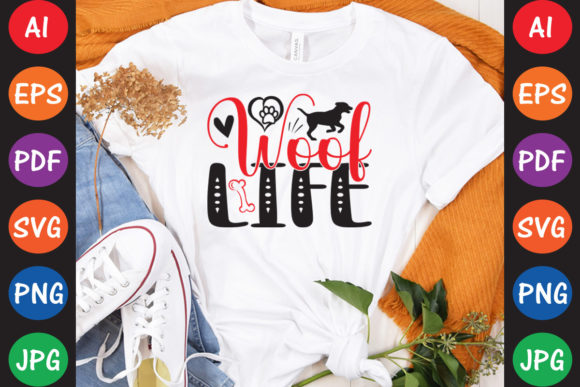
The mood of Woof Life is friendly, casual, and unmistakably dog-centered. It leans into the kind of sentiment that resonates with pet owners who treat their dogs like family. The layout feels balanced without being crowded, and the lettering has a hand-drawn quality that gives it personality. As a designer, I appreciate when a graphic does not try to be everything at once. This design knows its audience and sticks to a warm, approachable tone. It belongs naturally on custom apparel like t-shirts and sweatshirts, but I could also see it working well on tote bag design projects, embroidered patch orders, and even baby embroidery items if the recipient is a dog-loving parent. The theme is specific enough to feel intentional and broad enough to fit multiple product categories within the Crafts space.
Because Woof Life is sold as both a printable sublimation design and an SVG, it sits in the Graphics category comfortably. That means you can use it for digital mockups, heat transfer projects, and embroidery alike. But for this review I focused on how it behaves as a machine embroidery design, because that is where most of my hands-on testing happens. The visual personality is playful but not childish, which matters when you are trying to sell finished products to adults who want quality handmade product gifts.
Testing Woof Life on a Personalized Tote Bag
I wanted a real scenario to evaluate how Woof Life would actually look after stitching, so I decided to prepare a custom embroidered tote bag for a local dog owner whose birthday was coming up. The bag was a medium-weight cotton canvas in natural cream. I hooped the fabric with a medium cut-away stabilizer, which is my default for tote bags because it prevents puckering and keeps the stitches clean through years of use. I used a 5x7 hoop, which gave me enough room to center the design without feeling cramped. The thread colors I chose were a warm charcoal gray for the main text and a soft teal for a small paw accent that appeared near the wordmark. I wanted the design to feel modern but not flashy, something the recipient could carry to the farmers market or the dog park without feeling overdressed.
The finished result was better than I expected. The satin stitch sections came out crisp and the fill stitch areas had a smooth, even texture. The lettering was readable at a distance, which is important for a tote bag that will be seen in public. I handed the bag to the recipient and watched her reaction. She immediately recognized the tone of the design as something that matched her own relationship with her dog. That is the kind of emotional connection that leads to repeat sales and word-of-mouth referrals. For any Etsy seller or small shop product creator, that moment is gold. Woof Life delivered it without needing any modifications on my end.
How Woof Life Performs Across Different Products
After the tote bag test, I wanted to push the design further and see how it behaved on other surfaces. I ran a second test on a lightweight cotton t-shirt, which is a more challenging fabric because it stretches and shifts under the needle. I used a tear-away stabilizer and a light adhesive spray to keep everything in place. The design stitched cleanly, though I would recommend a hoop size that matches the outer dimensions of the file to avoid distortion. On sweatshirt embroidery, the design held up even better because the thicker fabric absorbed the stitches without any visible tunneling. I also tried it on a piece of denim for a possible embroidered patch project, and the density was just right. It did not feel overly stiff, but it also did not look sparse.
For baby embroidery items like a onesie or a receiving blanket, I would suggest scaling the design down slightly and checking the stitch density to make sure it does not overwhelm the delicate fabric. The same caution applies to holiday embroidery pieces like kitchen towels or pillow covers where the fabric might be lighter weight. On applique design projects, Woof Life could work well as a centerpiece with fabric patches underneath, but I would test a small sample first because the original design is not structured as an applique. It is a standalone embroidery file, so you would need to create your own applique layers if that is your goal. That said, the clean outlines make it a good candidate for that kind of adaptation if you are comfortable editing embroidery files.
Where Woof Life Needs Extra Care
No design is perfect for every surface, and Woof Life has a few limitations worth noting. The first is small hoop sizes. If you are working with a 4x4 hoop, you will need to check whether the entire design fits without compressing the lettering. Some of the finer details in the typography could lose clarity if you scale down too aggressively. I recommend testing the design on scrap fabric first at your intended size before stitching on the actual product. Second, on dark fabric, the design relies heavily on thread contrast. I used a light gray thread on a dark navy t-shirt in a separate test, and while it was readable, the lighter colors in the accent elements did not pop as much as I wanted. If you are stitching on dark backgrounds, consider using a white or very bright thread for the main text and a higher contrast for the details.
On stretchy fabric like jersey knit or ribbed cuffs, the design can distort if the stabilizer is not firm enough. I recommend a cut-away stabilizer for anything with stretch, and a medium weight at minimum. For curved surfaces like caps, Woof Life is probably best placed on the front panel rather than curved around the brim, because the lettering could warp. If you are doing commercial embroidery runs for a pet-related business, test a sample on the exact garment you plan to use before committing to a bulk order. The design is reliable, but your fabric choice and hoop technique matter just as much as the file itself.
Visual Appeal and Customer Perception
From a buyer's perspective, Woof Life communicates a sense of warmth and personal connection. When I showed the finished tote bag to a small group of friends who run craft business booths at local markets, the reaction was consistently positive. They mentioned that the design looked like something they would buy for themselves or as a personalized gift for a fellow dog owner. That kind of organic interest is exactly what you want when you are building a product line. The design does not rely on trendy phrases that will feel dated next season. It taps into a lifestyle identity that is stable and emotionally resonant. That makes it a strong candidate for holiday embroidery orders, wedding gifts for couples who share a dog, or boutique branding for a pet-focused shop.
In terms of professionalism and brand consistency, Woof Life holds its own. The typography is clean enough to look polished but informal enough to feel personal. That balance is hard to find in many digital embroidery files. I have seen designs that are either too generic or too quirky to appeal to a broad customer base. Woof Life sits in a sweet spot where it can be marketed as a handmade product for everyday use or as a design asset for printable mockups and digital product previews. If you are an apparel decorator or a creative entrepreneur, this is the kind of design that can generate multiple product variations without losing its identity.
Practical Notes for Embroidery Designers
After running several tests, here are my practical recommendations for anyone planning to use Woof Life in a real project. First, always test on scrap fabric before stitching on your final product. This is true for every embroidery file, but especially for designs with lettering that needs to stay crisp. Second, check the thread colors against both light and dark fabric backgrounds. I recommend creating a black and white mockup of the design to evaluate contrast before you choose your thread palette. This simple step can save you from stitching a full run only to realize the text blends into the fabric. Third, pay attention to stabilizer selection. For woven fabrics, a medium cut-away works well. For knits, go with a firmer cut-away. For towels or fleece, use a sticky stabilizer or a water-soluble topping to keep the stitches from sinking into the nap.
Fourth, verify the hoop size required for your intended placement. If you are working with a small hoop, confirm that the design does not clip any edges or distort the spacing. Fifth, inspect the small details in the design file before stitching. Look for any stray nodes, uneven underlay, or areas where the stitch density feels too heavy. Most digital embroidery files are well-constructed, but I always open the file in my software and run a visual check before committing thread to fabric. Finally, if you plan to sell the finished items, confirm the licensing terms for Woof Life. The product description mentions it is best for t-shirt design, mugs design, and other purposes, but you should verify whether the license covers commercial embroidery and digital product sales. Some designs come with restrictions on how you can use the file for resale or mass production. Knowing this upfront protects your craft business and ensures you stay compliant.
Commercial Use and Small Shop Potential
For anyone running a small business or an Etsy seller shop, Woof Life offers solid potential as a SKU that can be adapted across multiple product lines. I could see it working on t-shirts, tote bags, caps, aprons, pillow covers, tea towels, blankets, and even nursery decor for a dog-themed baby room. The phrase is broad enough to appeal to men and women, and the design style does not lean heavily into gendered aesthetics. That expands your customer base naturally. If you are a handmade shop owner looking for a design that can generate repeat orders, Woof Life is a candidate worth testing. It also works well for craft fair products because it catches the eye without being overwhelming. Customers who see it on a display tote or a sample t-shirt will likely ask if you can personalize it with their dog's name or breed. That opens the door for upselling and custom orders.
From a digital product seller perspective, Woof Life can be used in printable mockups and design assets for your own marketing materials. The SVG format makes it easy to resize and place on product photography without losing quality. If you sell embroidery file bundles or physical finished products, having a versatile design like this in your catalog strengthens your overall offering. Just remember to check the licensing before selling any digital copies of the design itself, as some Graphics products are licensed for personal use only. The product description says it is best for t-shirt design, mugs design, and any other purpose, but as a responsible designer, I always recommend reading the fine print. When in doubt, reach out to the seller for clarification. It is better to know the rules ahead of time than to discover a limitation after you have already invested time and materials into a production run.
Final Thoughts on Woof Life for Real Projects
After spending time with Woof Life across multiple fabrics, hoops, and product types, I can say with confidence that it is a well-crafted design that delivers on its promise. It is not hyper-detailed to the point of causing thread breaks, but it has enough character to feel special. It is not so simple that it looks generic, but it is clean enough to stitch reliably on a variety of machines. For an embroidery project that needs to feel personal and professional at the same time, Woof Life fits the brief. Whether you are making a personalized gift for a friend, building inventory for your small shop, or testing a new product category in your craft business, this design earns a place in your digital library. I will be using it again for future orders, and I recommend giving it a test run on your own machine. Just remember to check your thread colors, test your stabilizer, and always stitch a sample before you go to production. That is the approach that turns a good design into a great finished product.